Embedded Platforms: Trends and Products of 2017
By Michael Parks, P.E. for Mouser Electronics
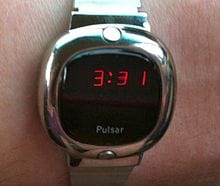
Figure 1: Pulsar Digital Watch. (Source: Wikipedia)
In 1972, the Hamilton Watch Company released the Pulsar digital watch for a price just north of $2,000 (USD). The
red glow of the watches LEDs was a visible cue that the future had arrived. For many, the first personal encounter
with embedded electronics was a digital wrist watch like the Pulsar or perhaps a simple four-function calculator.
Fast forward over forty years later, and it’s easy to see that the world of embedded systems has never slowed
down. 2017 is shaping up to be another exciting year for embedded developers as platforms continue to evolve to
incorporate improvements that will make delivering products to the eager hands of consumers faster and cheaper.
To appreciate the new embedded platforms that are coming this year, it’s important to consider what has been
happening in the marketplace and what is driving the need for new hardware. In a nutshell, we are seeing a maturing
of many product categories that first emerged over the past five years or so. If you look at the plot of adoption
rates of many new product categories, there almost always seems to be a strong initial adoption, followed by an
equally sharp drop off if first generation products fail to live up to the hype. This is followed finally by a long
yet steady adoption by the masses as follow-on product generations improve and costs drop. With that in mind, here
are some of the factors that are shaping the marketplace in 2017:
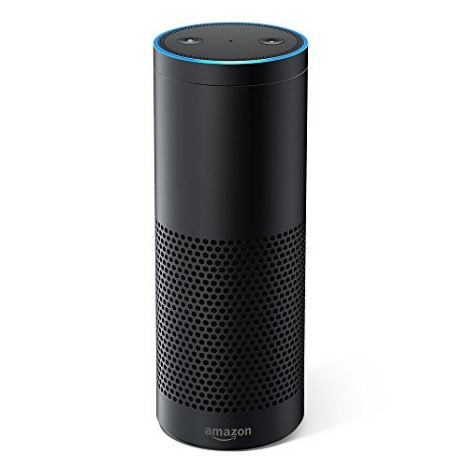
Figure 2: Embedded Digital Assistants, such as
Amazon's Alexa inside the Echo hardware, are changing how people interact with their electronic devices.
(Source: Wikipedia)
Internet of (at least a few) Things: While it remains to been if a truly holistic “Internet of Things” will emerge anytime
soon, there should be no doubt that the market for “smart” devices is certainly on the rise. Devices
that can be remotely monitored and controlled over the Internet, such as light bulbs and thermostats, continue to
gain increasing popularity. Some estimates put the number of connected devices set to break 20-billion this year, up
from 17-billion in 2016.1
Disembodied Digital Assistants: The war of AI-powered digital assistants is going to explode this
year. Amazon has Alexa, Apple has Siri, Microsoft has Cortana and Google has arguably the least personable digital
assistant, simply named Google Assistant. The natural voice interaction with our devices has been slow to take off,
but it seems that more and more consumers are finally getting comfortable with the idea of interacting with an
assistant who lives inside their electronic devices.
Drivable trumps Wearable: The wearables market is one where market forecasts and anecdotal evidence
seem to diverge. From a cursory review of the market, it would appear that wearables (almost strictly defined as a
device you strap to your wrist) may have just been a fad. Pebble, which was one of the pioneers of the wearable
smartwatch market, has recently been acquired by competitor FitBit. In turn, FitBit itself has been struggling
against the Apple Watch. And while this is certainly not slam dunk evidence of fad status, a recent renovation at a
local Best Buy store saw the floor space dedicated to smartwatches and fitness trackers shrink quite a bit. Perhaps
the wearable market is just stagnating until battery performance improves dramatically or until enough must-have
features can get squeezed into the wearable form factor. That said, the market is still forecasting an annualized
growth of 18% through at least 2021.2
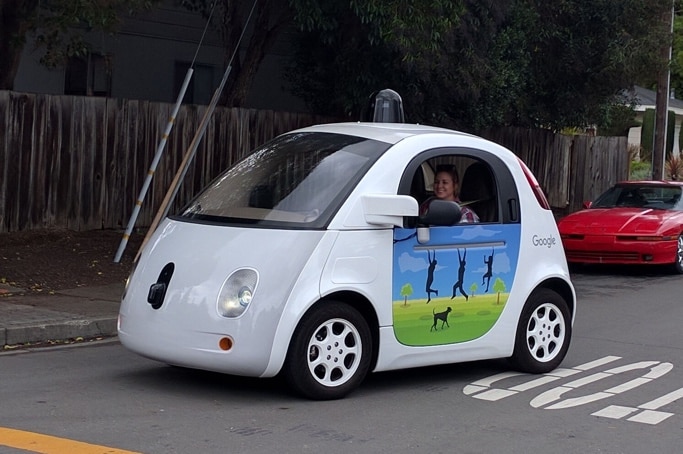
Figure 3: Self driving cars are poised to go from science
fiction to science fact soon. (Source: Google)
On the other hand, the interest in smart cars
and self-driving cars is seeing an explosion in both interest and engineering development.3
Consumers, car makers, and the electronics industry are all hoping for widespread adoption of smart cars in the near
future. Perhaps it is because of how many hours people spend in their cars. After all, an automobile for most
isn’t merely nice to have, but rather it is a necessity of modern life needed to get to work and take kids to
their doctor’s appointments. In other words, if you are going to have to buy a car anyways, might as well
spend
a few extra dollars to make it fun and functional.
Fallout of 2016 Mergers: 2016 was a year of significant consolidation in the electronics industry.
We saw ON Semiconductor acquire Fairchild, Analog Devices purchased Linear Technology, ARM Holdings was acquired by
Softbank, Microchip bought out Atmel, and Qualcomm sought to buy NXP. Thus, one can safely ask if we will see more mergers
this year? The answer to this question and the fallout from the 2016 M&As will continue to have major
effects on product developers plans both in terms of legacy support and future development roadmaps.
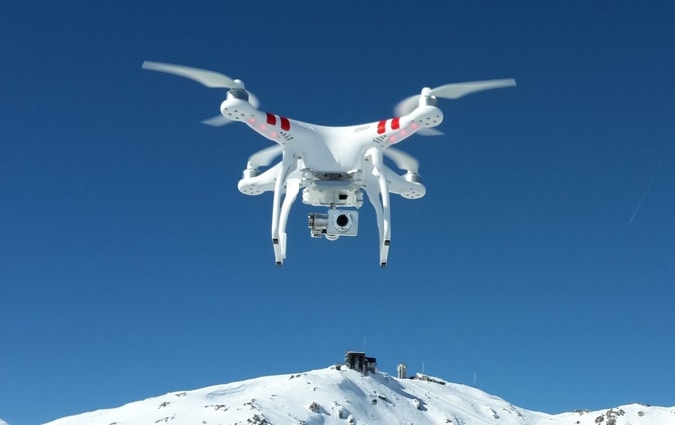
Figure 4: As commercial drone use becomes common, embedded
electronics will be key to adding new functionality to meet demands of new use cases. (Source: DJI)
Still Up in the Air: Drones and AR/VR. Augmented Reality, Virtual Reality and consumer/prosumer
grade aerial drones are other areas where embedded electronics play significant roles. 2017 will be a very telling
year for the AR/VR market as it has only started hitting its stride within in the last few months.4
Likewise, the drone market looks promising as there continues to be growth that is fueled not merely by consumer
demand, but more importantly by business growth.5 Niche markets continue to develop that have been made
possible by low-cost hardware and an increasingly supportive regulatory environment for commercial drone use. For
now, though, it seems AR/VR technology and aerial drones are a few years away from really “taking
off.”
Prototyping with Extreme Power (and Ports)
Figure 5: An embedded developers dream come true, the BeagleBoard is
powerful and has tons of expansion options. (Source: BeagleBoard)
The open source BeagleBoard X15 has been a
long time coming. Details first emerged in 2014 and yet general availability is still just around the corner. The
X15 is way more powerful than your typical single board computer (SBC). At a price comparable to an entry-level
Google Chromebook (MSRP is currently listed as $239) the X15 is a development board that is built for applications
that need serious computational horsepower. The X15 will be powered by a dual-core ARM Cortex A15-based processor
(Sitara AM5728) with 2GB DDRL3 memory and 4GB of onboard flash memory, and a microSD slot for further expansion. The
graphics hardware will be capable of pushing 60 fps at 1080 resolution. As for power, the X15 requires a 12VDC
supply and a minimum 5A. This is not for low power applications! What sets the BeagleBoard X15 apart from other SBC
competitors is the sheer number of ports available. A quick rundown of the included onboard interfaces:
- (x2) High-speed USB 3.0 host
- (x4) USB 2.0 host
- micro USB client
- eSATA connector
- (x2) 10/100/1000 Ethernet
- Full-size HDMI
- Stereo In and Out jacks powered by a TI-based TLV320AIC3104
- (x4) 60 pin dual row headers that serve as expansion ports for options such as LCD displays, PCIe bus, and a
camera.
- Other hardware interfaces including 157 GPIO pins, 7 UARTs, 1 SPI bus, 1 I2C bus, and 1 CAN bus.
The X15 is unabashedly geared to heavy duty use cases. With promised compatibility including a variety of Linux
flavors such as Debian, Ubuntu, and Android, the design possibilities of the X15 are quite endless. Early prototypes
of the X15 have found the hardware used in applications such as homebrewed media centers, robotics, custom 3D printers, and security
testing devices.
For designers who need something a little more lightweight and mobile, the BeagleBone Black spawned a wireless
option late last year, giving up the Ethernet port for 802.11b/g/n and Bluetooth LE. The takeaway is that while
power is important, you've got to be wireless if you are going to be serious about competing in the IoT space.
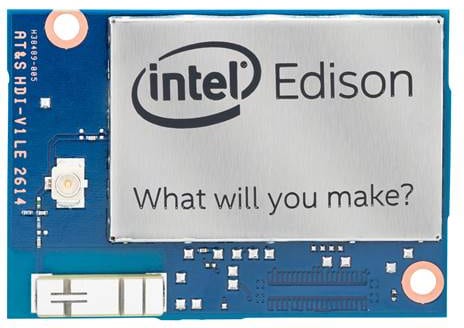
Figure 6: Google's new IoT Operating System, Android Things
is launching with support for the Intel Edison, Raspberry Pi 3, and NXP Pico. (Source: Intel)
Google Swings Again
In what might seem like an eternity ago, back in 2011 Google first dipped its toes in embedded hardware with its
Android@Home and the Android Open Accessory Development Kit (ADK). Powered by an Arduino Mega 2560, the ADK promised
to let developers easily build Android-based apps that could control hardware. It never really caught on, and Google
eventually moved on after making some minor updates to the development kit in 2012.
Flash forward to Google I/O 2015, and Google announced a pair of interrelated projects -
Brillo, which is to be an Android-based OS focused on IoT devices, and Weave, a communications protocol to connect
IoT devices. Then late last year Google announced that Brillo was yet again evolving, and is now Android
Things.6 Google has announced that partners such as LiFX, Honeywell, Belkin, TP-Link and First Alert will
launch products based on Android Things throughout 2017.
From an embedded hardware perspective, what is very interesting is the three platforms that are initially
supported-- Intel Edison, Raspberry Pi
3, and the NXP Pico. It will be curious to see if the
embrace of Google and its Android Things OS will result in an increased interest amongst embedded developers for
these three platforms.
Alexa Everywhere
The Consumer Electronics Show of 2017 is already history. In prognosticating the tech futures, the CES tends to be
hit or miss. In recent years, 3DTVs and curved TVs were all the rage, but are now relegated to the “nice
try” chapter of promised tech revolutions. This year, the “belle of the ball” was
Amazon’s Alexa.7 Everyone was smitten by her, including (but not limited to) Ford, LG, Inrix,
Volkswagen, Huawei, Whirlpool, Samsung, Linksys, Conway ADT, and Dish TV. All of these companies have introduced
products that will include some level of integration with Alexa. Still, others unveiled their own Alexa-esque
technology. In short, talking with our embedded electronics is about to become serious business, perhaps even
significant enough to be considered a “make-or-break” differentiator when consumers are making a
purchasing decision between competing products.
The assistants themselves are not confined to the smartphone but can also inhabit fairly simplistic standalone
electronic devices. For Amazon, Alexa resides in the Echo product family while the Google Assistant lives in a
similar device called Google Home. Apple is also rumored to be building its own self-contained hardware solution for
Siri.
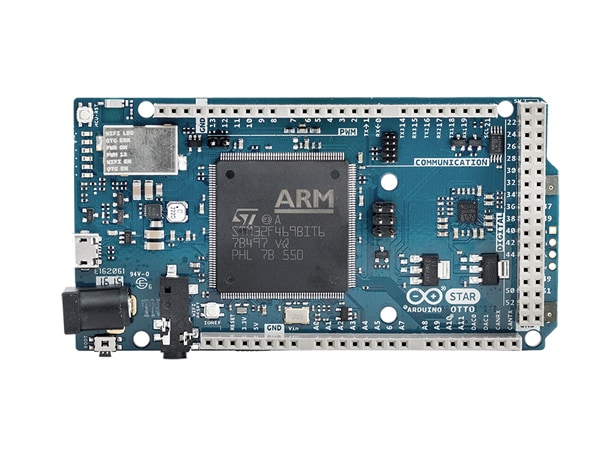
Figure 7: The Arduino STAR Otto likes especially suited to
homebrewing your own version of Amazon's Alexa. Source: (Arduino.org)
Embedded platform manufacturers are taking notice and are integrating the necessary hardware to make two-way
conversation a snap for product designers. The STAR Otto is an upcoming development board coming from Arduino, in collaboration with STMicroelectronics. Announced at last year's Maker Faire but
before the happy resolution of Arduino’s legal battles, the Otto is now slated for 2017 release. The Otto
features a robust STM32F469
processor (based on an ARM Cortex-M4 architecture), Espressif ESP8266 for WiFi connectivity, and a
convenient onboard stereo microphone. No doubt that the intent of the hardware is to allow makers to build
homebrewed devices that will leverage voice control and Internet connectivity. Might we see an open source Alexa this year?
Beware the Insider
ASUS began as a manufacturer of Intel 486 motherboards in the late 1980s. Eventually, after some restructuring and
spin-offs it stopped building parts for other companies and became an original equipment manufacturer of entire PC
systems. ASUS was able to break into in a very competitive marketplace because it could build reliable hardware and
sell it at a very competitive price. It would seem that ASUS is hoping to repeat the success it had in breaking into
the desktop PC market by introducing the ASUS Tinker Board as a way to break into the burgeoning market for tiny
credit card sized computers, which is currently dominated by the likes of BeagleBone and Raspberry Pi.
Figure 8: Could the new kid on the Single Board Computer block take over from
current favorites? Asus Tinker Board just might. (Source: Asus)
The Tinker Board boasts a respectable performance boost over the current Raspberry Pi 3 for a modest uptick in
cost. It is powered by an ARM-based System-on-a-Chip (SoC) solution from Rockchip. The RK3288 has found recent
success in inexpensive Android-based “set-top boxes,” tablets and Chromebooks. At its core is a
quad-core, 32-bit ARM Cortex A17 processor and an ARM Mali-T764 GPU that promises to be able to handle 4K video.
Rounding out the impressive specs are 2GB of LPDDR3, WiFi, Bluetooth, Ethernet, four USB 2.0 ports, a microSD slot
and a 40-pin breakout header that exposes the tinker-friendly GPIO pins.
Intel Goes for a Drive
Intel is also betting big on the promise of the Internet of Things and in particular the automotive segment of the IoT. 2017 will
see the launch of their Atom E3900 series processor which has been built from the ground up to support the IoT
ecosystem. They are also offering a version of the E3900 that is dedicated to automotive applications called the
A3900. According to the Intel press release, “The [A3900] automotive series will enable a complete software
defined cockpit solution that includes in-vehicle infotainment (IVI), digital instrument clusters and an advanced
driver assistance system (ADAS) – all in a single, compact and cost-effective SoC.”8
Figure 9: Smart cars are going to be here before we know. Intel's new E3900
and A3900 series hopes to be the brains of the next generation of IoT devices. (Source: Intel)
The need for such embedded hardware may be pushed not just by market forces, but also from government regulation.
In the United States, the National Highway Traffic Safety Administration introduced a proposed regulation that would
require all vehicles sold from 2023 onward to have so-called Vehicle-to-Vehicle (V2V) communication
technology.9 The hope of such technology would be to reduce the number of automobile accidents that are a
result of negligent driving. Of course, it could also serve as a precursor to fully autonomous vehicles if cars
could communicate and make decisions such as to optimize traffic flow through the automation of cruise control and
standoff distances between cars.
Industrial Strength Solutions
For many professional designers and engineers, the Arduino platform has been seen as something that is little more
than a toy. A toy that while good for educational or artistic purposes, had no practical value in “real
world” applications. The Arduino ecosystem last year began to push back on that notion and attempted to blur
the divide between professional and hobbyist grade embedded platforms with their Arduino Industrial 101, an
evaluation board for Arduino 101 LGA module. The hope is to get professional users to consider replacing devices
traditionally found in industrial
applications, such as Programmable Logic
Controllers (PLC), with this more robust and powerful iteration of the Arduino form factor.
Figure 10: Arduino looks to grow some industrial strengths buying addressing
IIoT/M2M communications needs with a LoRaWAN shield. (Source: Arduino.org)
This year the Arduino platform is going a step further in its pursuit of becoming a professional grade solution for
the Industrial Internet of Things and Machine-to-Machine (IIoT/M2M) market. They are introducing a shield that will
give their platform access to Long Range
Radio Wide Area Network (LoRaWAN or simply LoRa) network technology. Dubbed the “Industrial IoT
Connectivity board”10, LoRa allows battery-operated devices to connect to a so-called concentrator
or gateway from several kilometers away. As opposed to WiFi or Bluetooth connections where connectivity distance is
measured only in the tens of meters. The range and energy efficient nature of LoRa and other Low Power Network (LPN)
standards will be critical for efficiently realizing the promises of the next generation IIoT/M2M technologies.
The More Things Stay the Same, The More They Change
While that might sound like a mistake, in many ways, it captures exactly what is happening in the embedded space in
2017. Demand for products like drones, digital assistants, wearables, self-driving cars, AR/VR, and IoT/IIoT/M2M
devices is staying constant, but the embedded hardware behind them is maturing so that product engineers can meet
these demands quicker and with less expense.
The great unknown is what the repercussions will be in 2017 from the mergers that began in 2016? Short term newly
acquired intellectual property will be supported, but in the long run, certain embedded platforms could be phased
out
as companies look to streamline their product offerings. This could very well yield significant engineering
challenges
as product developers are forced to change their designs to incorporate alternative components. Regardless, 2017 is
shaping up to be another great year for product design engineers. Demand for embedded products remains high, and
platform manufacturers continue to unleash new embedded platforms that incorporate the latest technology and
designer-friendly features.
Sources
- Columbus, Louis. Forbes. “Roundup of Internet of Things Forecasts and Market
Estimates”
- Business Insider. “FitBit Struggles
Show That The Wearables Market is Stagnant”
- Snider, Mike. USA Today. “At
CES 2017, the Frenzy over Self-Driving Cars is Palpable”
- Digi Capital. “After
Mixed Year, Mobile AR to Drive $108 Billion AR/VR Market by 2021”
- Vallese, Frank. TechCrunch. “New Rules
Fuel the Growth of the Commercial Drone Industry”
- Android Developer. “Bringing Device
Production to Everyone”
- Kastrenakes, Jacob. The Verge. “Amazon’s
Alexa is Everywhere at CES 2017”
- Caviasca, Ken. Intel. “Intel
Atom Processor E3900 Series: Enabling the Next Generation of Smart and Connected IoT Devices”
- Hall-Geisler, Kristen. TechCrunch. “All New Cars Could Have V2V
Tech by 2023”
- Econo Times. “CES
2017: Arduino Demonstrates IoT Board, Shields and Partnership to jEnable Connectivity and
Transactions”
 Michael Parks, P.E.
is a contributing writer for Mouser Electronics and the owner of Green Shoe Garage, a custom electronics design
studio and technology consultancy located in Southern Maryland. He produces the S.T.E.A.M. Power Podcast to help
raise public awareness of technical and scientific matters. Michael is also a licensed Professional Engineer in the
state of Maryland and holds a Master’s degree in systems engineering from Johns Hopkins University.
Michael Parks, P.E.
is a contributing writer for Mouser Electronics and the owner of Green Shoe Garage, a custom electronics design
studio and technology consultancy located in Southern Maryland. He produces the S.T.E.A.M. Power Podcast to help
raise public awareness of technical and scientific matters. Michael is also a licensed Professional Engineer in the
state of Maryland and holds a Master’s degree in systems engineering from Johns Hopkins University.